
Student practice page · Grades K–2 · 8 minutes
Ask for help on the first day back
Point, say, or draw with an adult. Includes a student page and counselor guide for returning after a shared school break.
Free account to download · No Cora credits · 2 pages
Read the text version
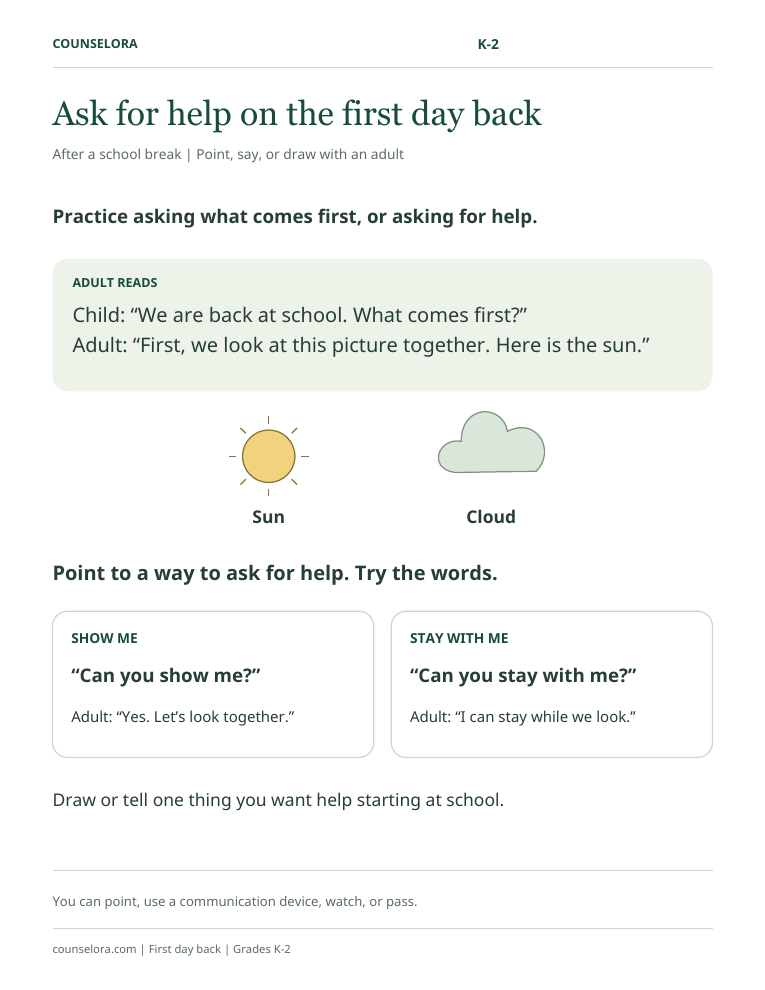
COUNSELORA K-2 Ask for help on the first day back After a school break | Point, say, or draw with an adult Practice asking what comes first, or asking for help. ADULT READS Child: “We are back at school. What comes first?” Adult: “First, we look at this picture together. Here is the sun.” Sun Cloud Point to a way to ask for help. Try the words. SHOW ME “Can you show me?” Adult: “Yes. Let’s look together.” STAY WITH ME “Can you stay with me?” Adult: “I can stay while we look.” Draw or tell one thing you want help starting at school. You can point, use a communication device, watch, or pass. counselora.com | First day back | Grades K-2
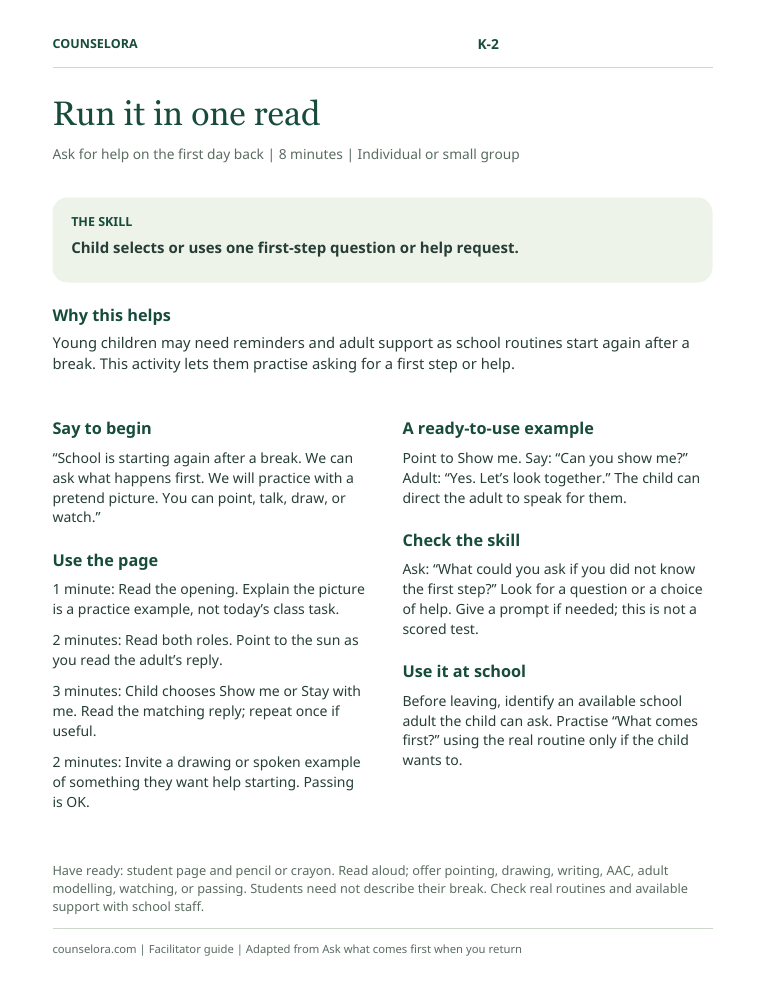
COUNSELORA K-2 Run it in one read Ask for help on the first day back | 8 minutes | Individual or small group THE SKILL Child selects or uses one first-step question or help request. Why this helps Young children may need reminders and adult support as school routines start again after a break. This activity lets them practise asking for a first step or help. Say to begin “School is starting again after a break. We can ask what happens first. We will practice with a pretend picture. You can point, talk, draw, or watch.” Use the page 1 minute: Read the opening. Explain the picture is a practice example, not today’s class task. 2 minutes: Read both roles. Point to the sun as you read the adult’s reply. 3 minutes: Child chooses Show me or Stay with me. Read the matching reply; repeat once if useful. 2 minutes: Invite a drawing or spoken example of something they want help starting. Passing is OK. A ready-to-use example Point to Show me. Say: “Can you show me?” Adult: “Yes. Let’s look together.” The child can direct the adult to speak for them. Check the skill Ask: “What could you ask if you did not know the first step?” Look for a question or a choice of help. Give a prompt if needed; this is not a scored test. Use it at school Before leaving, identify an available school adult the child can ask. Practise “What comes first?” using the real routine only if the child wants to. Have ready: student page and pencil or crayon. Read aloud; offer pointing, drawing, writing, AAC, adult modelling, watching, or passing. Students need not describe their break. Check real routines and available support with school staff. counselora.com | Facilitator guide | Adapted from Ask what comes first when you return