
Lesson · Grades 3–5 · 20 minutes
Choose a next step when frustrated
Use a safe pause and choose an action that addresses a school problem.
Download this activity with Plus
Read the text version
COUNSELORA Grades 3-5 · Counselor guide Choose a next step when frustrated
Counselor guide · Classroom or small group · 20 minutes
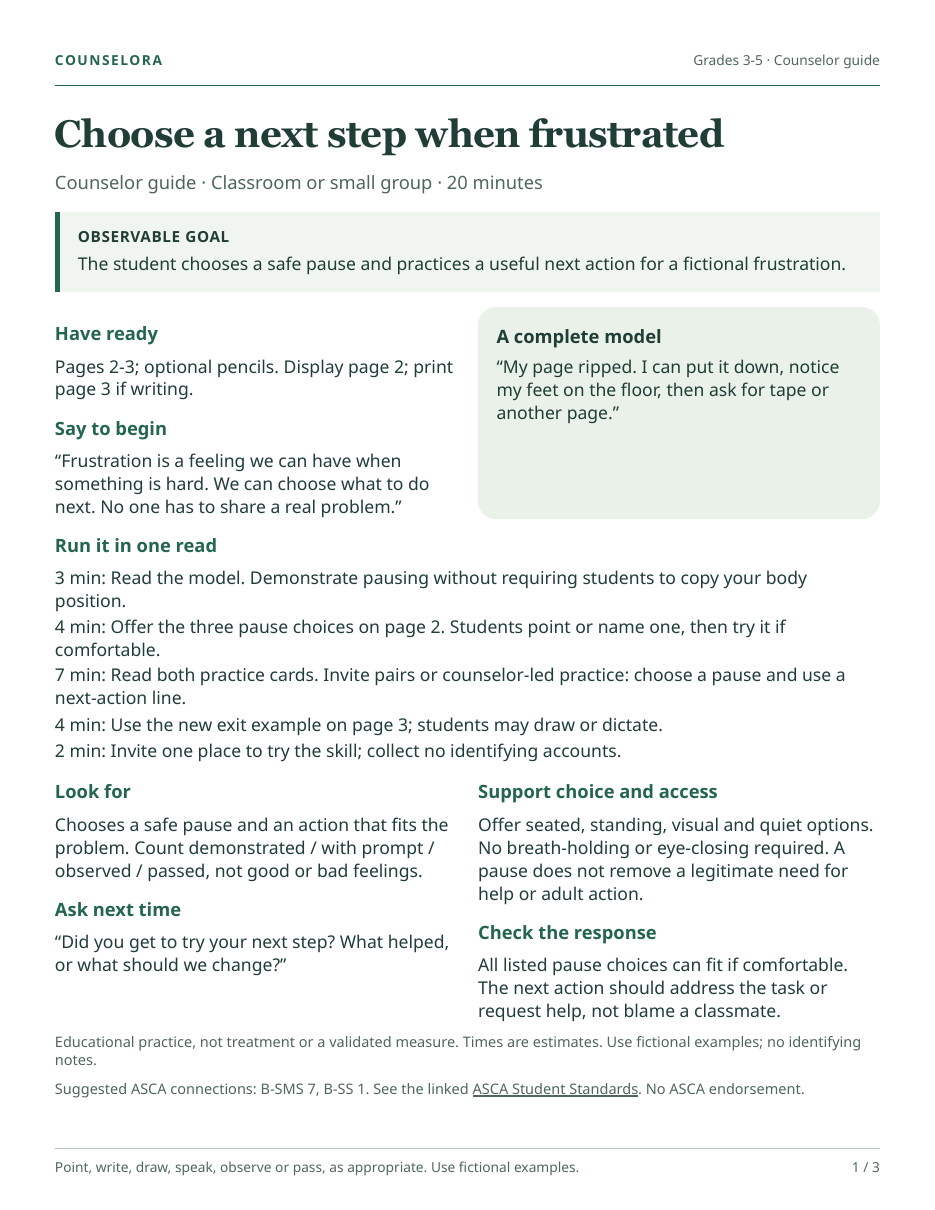
OBSERVABLE GOAL The student chooses a safe pause and practices a useful next action for a fictional frustration. Have ready
Pages 2-3; optional pencils. Display page 2; print page 3 if writing.
Say to begin
“Frustration is a feeling we can have when something is hard. We can choose what to do next. No one has to share a real problem.”
A complete model
“My page ripped. I can put it down, notice my feet on the floor, then ask for tape or another page.”
Run it in one read 3 min: Read the model. Demonstrate pausing without requiring students to copy your body position. 4 min: Offer the three pause choices on page 2. Students point or name one, then try it if comfortable. 7 min: Read both practice cards. Invite pairs or counselor-led practice: choose a pause and use a next-action line. 4 min: Use the new exit example on page 3; students may draw or dictate. 2 min: Invite one place to try the skill; collect no identifying accounts. Look for
Chooses a safe pause and an action that fits the problem. Count demonstrated / with prompt / observed / passed, not good or bad feelings.
Ask next time
“Did you get to try your next step? What helped, or what should we change?”
Support choice and access
Offer seated, standing, visual and quiet options. No breath-holding or eye-closing required. A pause does not remove a legitimate need for help or adult action.
Check the response
All listed pause choices can fit if comfortable. The next action should address the task or request help, not blame a classmate.
Educational practice, not treatment or a validated measure. Times are estimates. Use fictional examples; no identifying notes.
Suggested ASCA connections: B-SMS 7, B-SS 1. See the linked ASCA Student Standards. No ASCA endorsement.
Point, write, draw, speak, observe or pass, as appropriate. Use fictional examples. 1 / 3 COUNSELORA Grades 3-5 · Practice board Choose a next step when frustrated
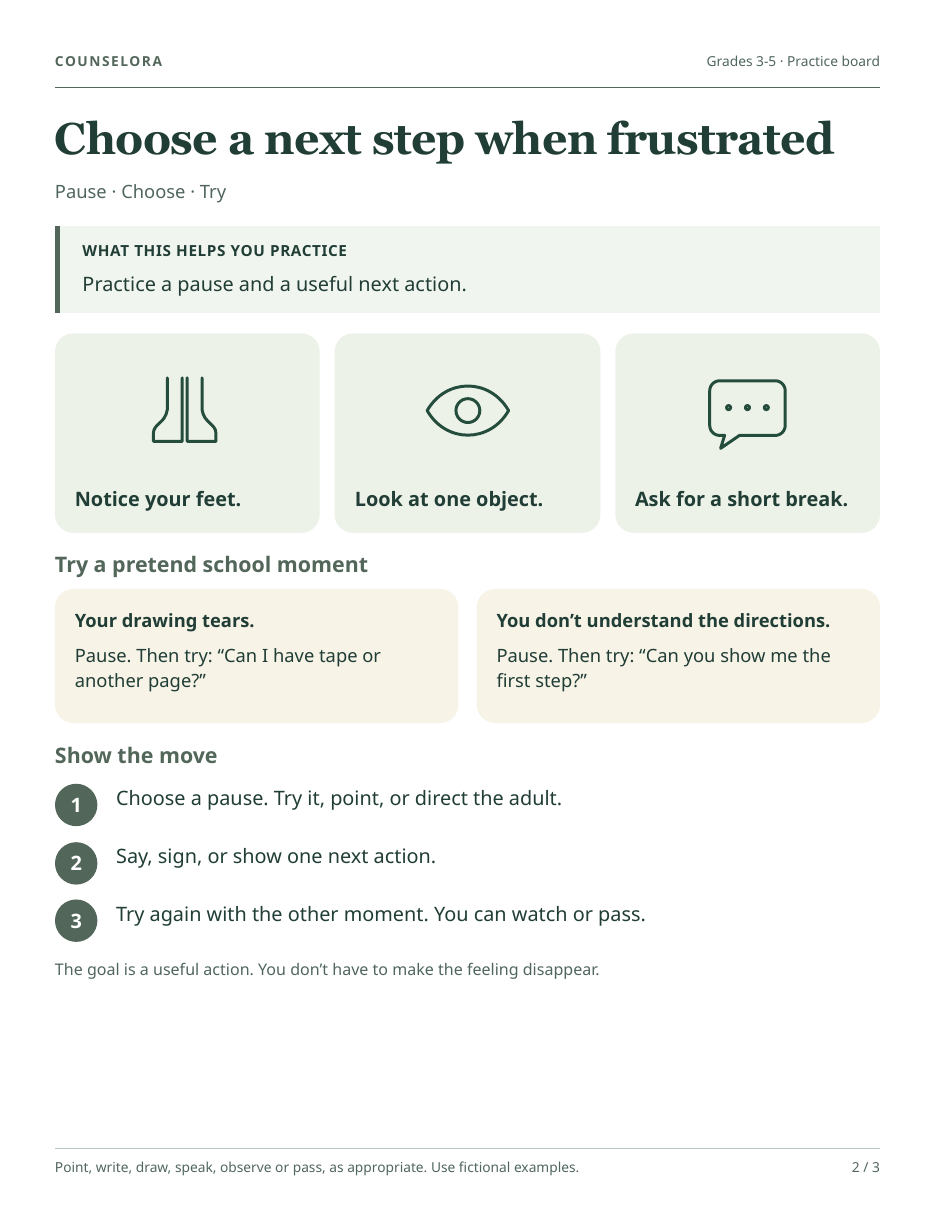
Pause · Choose · Try
WHAT THIS HELPS YOU PRACTICE Practice a pause and a useful next action. Notice your feet. Look at one object. Ask for a short break. Try a pretend school moment Your drawing tears.
Pause. Then try: “Can I have tape or another page?”
You don’t understand the directions.
Pause. Then try: “Can you show me the first step?”
Show the move
Choose a pause. Try it, point, or direct the adult.
Say, sign, or show one next action.
Try again with the other moment. You can watch or pass.
The goal is a useful action. You don’t have to make the feeling disappear.
Point, write, draw, speak, observe or pass, as appropriate. Use fictional examples. 2 / 3 COUNSELORA Grades 3-5 · Exit practice Choose a next step when frustrated
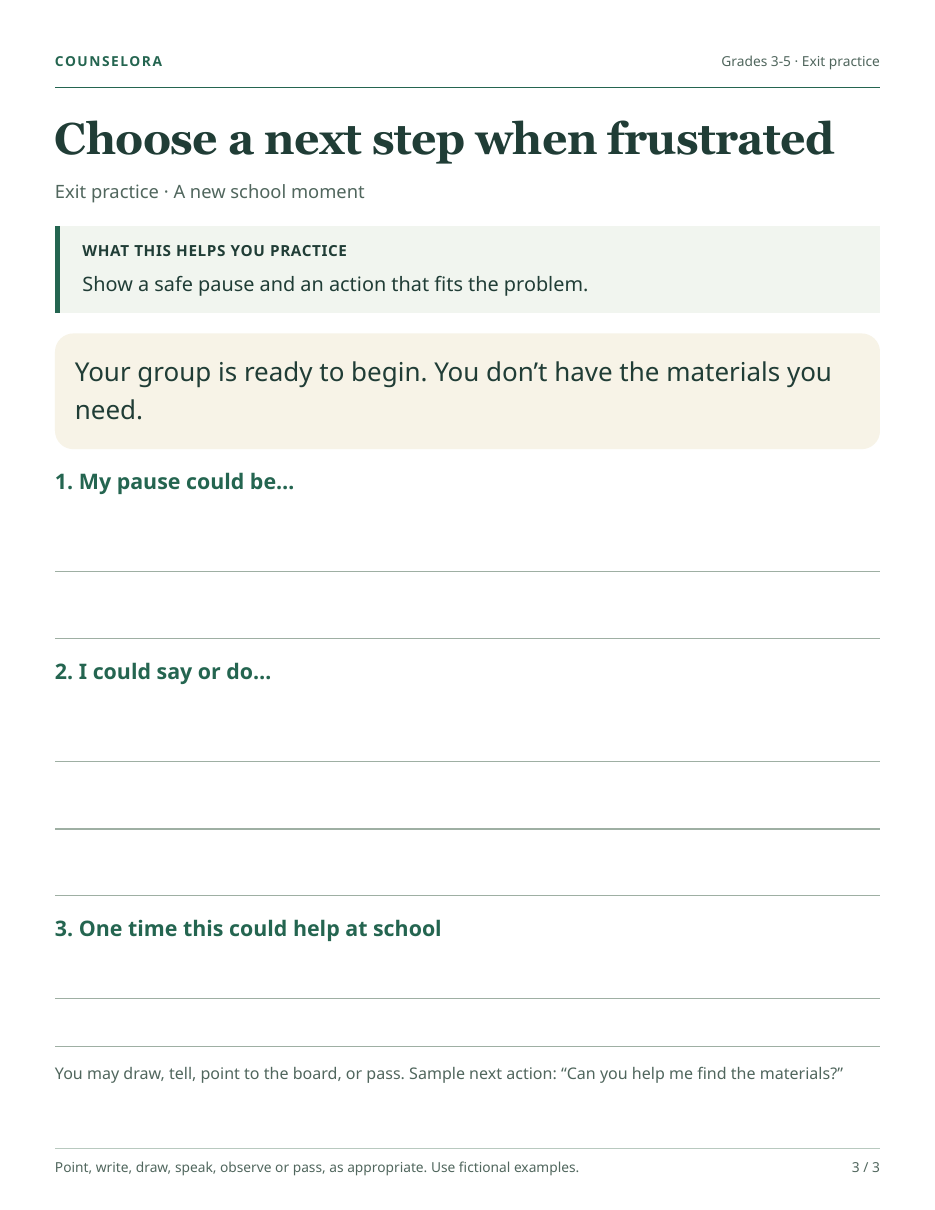
Exit practice · A new school moment
WHAT THIS HELPS YOU PRACTICE Show a safe pause and an action that fits the problem.
Your group is ready to begin. You don’t have the materials you need.
1. My pause could be… 2. I could say or do… 3. One time this could help at school
You may draw, tell, point to the board, or pass. Sample next action: “Can you help me find the materials?”
Point, write, draw, speak, observe or pass, as appropriate. Use fictional examples. 3 / 3
Visual descriptions: Two feet supported by the floor An eye noticing a nearby object A request for a break